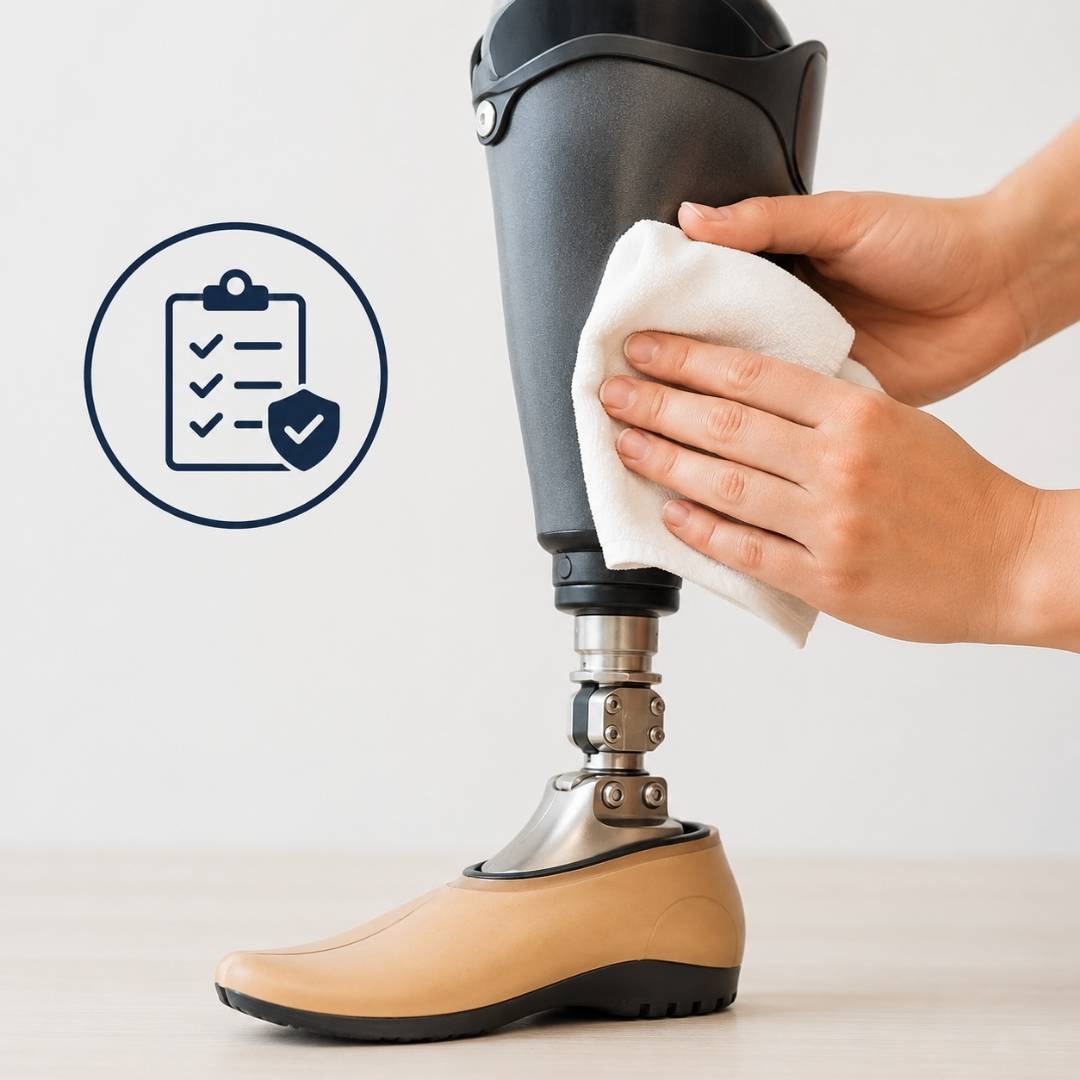
A prosthetic leg is much more than a medical device—it helps you walk, work, travel, and live independently. Just like a vehicle needs regular servicing, your artificial limb also needs proper care to perform well every day.
Many prosthetic users focus only on learning how to walk with their new limb but often overlook its maintenance. Poor cleaning habits, worn-out liners, loose components, or ignoring small issues can lead to discomfort, skin problems, expensive repairs, and even reduced mobility.
The good news is that maintaining a prosthetic leg doesn't require complicated tools or technical knowledge. By following a simple maintenance routine, you can improve comfort, extend the life of your prosthesis, and reduce unexpected problems.
This prosthetic leg maintenance checklist explains everything you need to know in easy language.
Why Is Prosthetic Leg Maintenance Important?
Every day, your prosthetic leg is exposed to sweat, dust, moisture, body weight, and continuous movement. Over time, these factors can affect both the comfort and durability of the prosthesis.
Regular maintenance helps:
Ignoring maintenance may result in loose fittings, unpleasant odour, damaged liners, worn foot components, or even sudden mechanical failure.
Your Daily Prosthetic Leg Maintenance Checklist
A few minutes each day can help keep your prosthetic leg in excellent condition.
Clean the Socket Every Day
The socket is the part that comes into direct contact with your residual limb. Sweat and bacteria can build up quickly.
Clean it daily using:
Avoid using harsh chemicals, alcohol, bleach, or abrasive cleaners, as they may damage the socket material.
Allow the socket to dry completely before wearing it again.
Wash Your Prosthetic Liner
If you use a silicone or gel liner, wash it every day.
Use:
Dry it with a clean towel and allow it to air dry completely before use.
Never expose liners to direct sunlight or excessive heat.
Keep Your Residual Limb Clean
Your skin is just as important as the prosthetic itself.
Wash your residual limb daily using mild soap and water.
Before wearing your prosthesis, ensure your skin is:
Healthy skin improves comfort and reduces infection risk.
Inspect Your Skin
Before and after wearing your prosthetic leg, check your skin for:
Mild redness that disappears within a few minutes is usually normal.
However, redness lasting more than 20–30 minutes should be evaluated by your prosthetist.
Listen for Unusual Sounds
Your prosthetic leg should not make clicking, squeaking, or grinding noises.
If you notice unusual sounds while walking, stop using the prosthesis and contact your prosthetic clinic.
These noises may indicate loose screws or worn mechanical components.
Weekly Maintenance Checklist
Along with daily cleaning, perform a detailed inspection once every week.
Check for:
Clean hard-to-reach areas with a soft brush.
Never attempt to repair mechanical components yourself.
Monthly Prosthetic Care Checklist
Every month, spend a little extra time checking your prosthetic leg.
Look for:
If your prosthetic feels different than before, schedule a professional inspection.
Small adjustments can prevent bigger problems later.
Common Mistakes That Can Damage a Prosthetic Leg
Many prosthetic users unintentionally reduce the lifespan of their artificial limb.
Avoid these common mistakes:
Professional servicing is always safer than temporary home repairs.
How to Increase the Lifespan of Your Artificial Limb
With proper care, many prosthetic components can last for several years.
Follow these simple habits:
Proper maintenance not only extends the life of the prosthetic but also improves your overall walking experience.
When Should You Visit Your Prosthetist?
Do not wait until the prosthesis becomes unusable.
Visit your prosthetist if you notice:
Early intervention often prevents costly repairs.
Frequently Asked Questions
How often should I clean my prosthetic leg?
The socket, liner, and residual limb should be cleaned every day.
Can I wash my prosthetic leg with detergent?
No. Always use mild soap. Strong detergents and chemicals may damage the materials.
How long does a prosthetic leg usually last?
Most prosthetic components last between 3 to 5 years, while some advanced components may last longer with proper maintenance. Liners, sleeves, and prosthetic feet may require replacement sooner depending on usage.
Can I repair my prosthetic leg at home?
No. Home repairs can compromise safety. Always consult a qualified prosthetist for repairs or adjustments.
Why does my prosthetic leg smell?
Sweat and bacteria trapped inside the socket or liner are the most common causes. Daily cleaning usually solves the problem.
Final Thoughts
Your prosthetic leg supports you every step of the way, and taking care of it should become part of your daily routine. Simple habits such as cleaning the socket, inspecting your skin, checking for loose parts, and attending regular follow-up visits can make a significant difference in comfort, safety, and durability.
A well-maintained prosthesis not only lasts longer but also helps you stay active, confident, and independent. If you notice discomfort, unusual sounds, or signs of wear, don't ignore them. Seeking professional advice early can prevent bigger issues and keep you moving comfortably.
At Griffin Healthcare, we provide expert prosthetic fitting, maintenance, adjustments, and rehabilitation support to help every patient get the best performance from their artificial limb.





.png)

Explore patient stories, rehab solutions, & mobility updates @griffin_healthcare
Follow @griffin_healthcare